
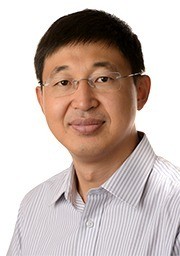
Yonghui Li, IEEE FELLOW, ARC Future Fellow, H-index 86
The University of Sydney, Australia
Biography
Yonghui Li is now a Professor and Director of Wireless Engineering Laboratory
in School of Electrical and Information Engineering, University of Sydney. He is the recipient of the
Australian Research Council (ARC) Queen Elizabeth II Fellowship in 2008, ARC Future Fellowship in 2012 and
ARC Industry Laureate Fellowship in 2025. He is an IEEE Fellow and Clarivate highly cited researcher. His
current research interests are in the area of wireless communications. Professor Li was an editor for IEEE
transactions on communications, IEEE transactions on vehicular technology and guest editors for several
special issues of IEEE journals, such as IEEE JSAC, IEEE IoT Journals, IEEE Communications Magazine. He
received the best paper awards from several conferences. He has published one book, more than 300 papers
in premier IEEE journals and more than 200 papers in premier IEEE conferences. His publications have been
cited more than 25000 times.
Speech Title: Beyond 5G towards a Super-connected World
Abstract
Connected smart objects, platforms and environments have been identified as the next big technology
development, enabling significant society changes and economic growth. The entire physical world will be
connected to the Internet, referred to as Internet of Things (IoT). The intelligent IoT network for
automatic interaction and processing between objects and environments will become an inherent part of
areas such as electricity, transportation, industrial control, utilities management, healthcare, water
resources management and mining. Wireless networks are one of the key enabling technologies of the IoT.
They are likely to be universally used for last mile connectivity due to their flexibility, scalability
and cost effectiveness. The attributes and traffic models of IoT networks are essentially different from
those of conventional communication systems, which are designed to transmit voice, data and multimedia.
IoT access networks face many unique challenges that cannot be addressed by existing network protocols;
these include support for a truly massive number of devices, the transmission of huge volumes of data
burst in large-scale networks over limited bandwidth, and the ability to accommodate diverse traffic
patterns and quality of service (QoS) requirements. Some IoT applications have much stringent latency and
reliability requirements which cannot be accommodated by existing wireless networks. Addressing these
challenges requires the development of new wireless access technologies, underlying network protocols,
signal processing techniques and security protocols. In this talk, I will present the IoT network
development, architecture, key challenges, requirements, potential solutions and recent research progress
in this area, particularly in 5G and beyond 5G.
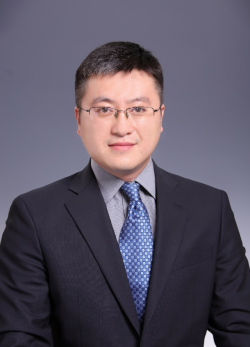
Feifei Gao, IEEE FELLOW, H-index 84
Tsinghua University, China
Biography
Feifei Gao (Fellow, IEEE) received the B.Eng. degree from Xi'an Jiaotong
University, Xi'an, China in 2002, the M.Sc. degree from McMaster University, Hamilton, ON, Canada in 2004,
and the Ph.D. degree from National University of Singapore, Singapore in 2007. Since 2011, he joined the
Department of Automation, Tsinghua University, Beijing, China, where he is currently a tenured full
professor.
Prof. Gao's research interests include signal processing for communications, array signal processing,
convex optimizations, and artificial intelligence assisted communications. He has authored/coauthored more
than 200 refereed IEEE journal papers and more than 150 IEEE conference proceeding papers that are cited
more than 18000 times in Google Scholar. Prof. Gao has served as an Editor of IEEE Transactions on
Wireless Communications, IEEE Journal of Selected Topics in Signal Processing (Lead Guest Editor), IEEE
Transactions on Cognitive Communications and Networking, IEEE Signal Processing Letters (Senior Editor),
IEEE Communications Letters (Senior Editor), IEEE Wireless Communications Letters, and China
Communications. He has also served as the symposium co-chair for 2019 IEEE Conference on Communications
(ICC), 2018 IEEE Vehicular Technology Conference Spring (VTC), 2015 IEEE Conference on Communications
(ICC), 2014 IEEE Global Communications Conference (GLOBECOM), 2014 IEEE Vehicular Technology Conference
Fall (VTC), as well as Technical Committee Members for more than 50 IEEE conferences.
Speech Title: Key Technologies and Prototype Design for Integrated Sensing and Communications System
Abstract
In the future, millions of base stations (BSs) and billions of users (UEs) will natively build an
integrated sensing and communications (ISAC) system, which can utilize intelligent ubiquitous methods to
realize the ultimate goal of sensing, i.e., constructing the global mapping from real physical world to
digital twin world, while providing communications services at the same time. For this purpose, we conduct
a series of theoretical and technical researches on ISAC, in which we decompose the real physical world
into static environment, dynamic targets, and various object materials. The ubiquitous static environment
occupies the vast majority of the physical world, for which we design static environment reconstruction
(SER) scheme to obtain the layout and point cloud information of static buildings. The dynamic targets
floating in static environments create the spatiotemporal transition of the physical world, for which we
design comprehensive dynamic target sensing (DTS) scheme to detect, estimate, track, image and recognize
the dynamic targets in real-time. The object materials enrich the electromagnetic laws of the physical
world, for which we develop object material recognition (OMR) scheme to estimate the electromagnetic
coefficient of the objects. Finally, based on these theoretical researches, we build an ISAC hardware
prototype platform working in millimeter wave frequency band, realizing high-precision SER, DTS, and basic
OMR, which provides preliminary verification for building the digital twin for communications networks.
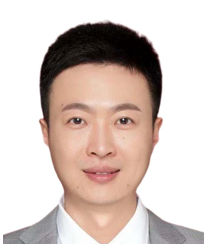
Yang Yue, SPIE Fellow, Optica Fellow, H-index 40
Xi'an Jiaotong University, China
Biography
Yang Yue received the B.S. and M.S. degrees in electrical engineering and
optics from Nankai University, China, in 2004 and 2007, respectively. He received the Ph.D. degree in
electrical engineering from the University of Southern California, USA, in 2012. He is currently a
Professor with the School of Information and Communications Engineering, Xi'an Jiaotong University, China.
He is the founder and current PI of Intelligent Photonic Application Technology Laboratory (iPatLab). Dr.
Yue’s current research interest is intelligent photonics, including optical communications, optical
perception, and optical chip. He has published >300 journal papers (including Science) and conference
proceedings with >14,000 citations, two books (Elsevier, Springer Nature), eight edited books, two book
chapters, >50 issued patents (including 30 U.S. patents and 6 European patents), >200 invited
presentations (including 1 tutorial, >30 plenary and >100 keynote talks). Dr. Yue is a Fellow of Optica
and SPIE. He is also among the Top 2% Scientists List Worldwide by Stanford University. He is an Associate
Editor for IEEE Access and Frontiers in Physics, Editor Board Member for four other scientific journals,
Guest Editor for >10 journal special issues. He also served as Chair for >100 international conferences,
Reviewer for >80 prestigious journals.
Speech Title: TBA...
Abstract: TBA...
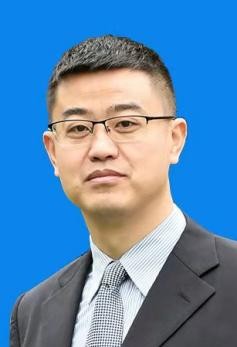
Junhui Zhao, IET Fellow, IEEE Senior Member, H-index 39
Beijing Jiaotong University, China
Biography
Junhui Zhao (Senior Member, IEEE) received the M.S. and Ph.D. degrees from
Southeast University, Nanjing, China, in 1998 and 2004, respectively. From 1998 to 1999, he was with
Nanjing Institute of Engineers, ZTE Corporation, Shenzhen, China. In 2004, he was an Assistant Professor
with the Faculty of Information Technology, Macau University of Science and Technology, Cotai, China, and
continued there as an Associate Professor, till 2007. In 2008, he was an Associate Professor with Beijing
Jiaotong University, where he is currently a Professor with the School of Electronics and Information
Engineering. He was a short term Visiting Scholar with Yonsei University, Seoul, South Korea, in 2004 and
a Visiting Scholar with Nanyang Technological University, Singapore from 2013 to 2014. Since 2016, he has
been with the School of Information Engineering, East China Jiaotong University, Nanchang, China. His
research interests include wireless and mobile communications and related applications.
Speech Title: TBA...
Abstract: TBA...